
Best Gold and Silver IRAs: Augusta, Goldco, Noble Gold & American Hartford Gold Compared
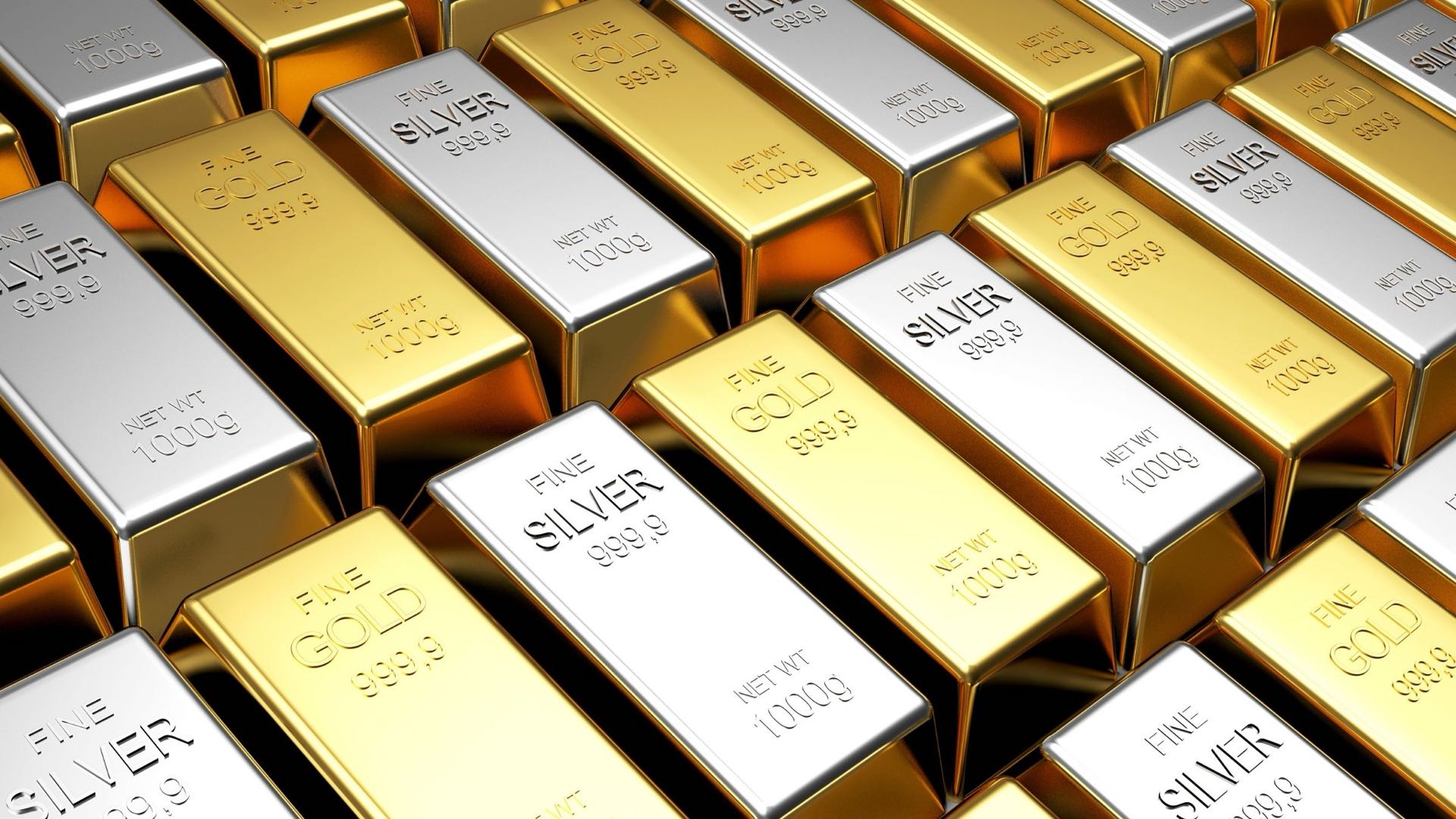
We ranked the four companies below on a blend of trust and tenure — BBB standing, complaint history, years in business — buying accessibility — minimum account size — and, since this page compares companies for holding both metals, dual-metal catalog depth and storage flexibility. All four hold an A+ BBB rating, so that factor mostly separates this group from the broader market rather than ranking within it. The full weighted criteria are explained under “How to Choose a Gold and Silver IRA Company” further down this page.
| # | Company | Rating | Minimum | Key Features | Action |
|---|---|---|---|---|---|
| 1 | Augusta Precious Metals Strongest Trust Record |
4.9/5 | $50,000 | ✓ Fewer than 5 BBB complaints since 2012 ✓ 1:1 education session before signup ✓ Gold-and-silver-only catalog |
Diversify with Augusta → |
| 2 | Goldco Published Buyback Guarantee |
4.8/5 | $25,000 | ✓ Published buyback guarantee ✓ $2B+ in precious metals delivered since 2006 ✓ BBB A+ since 2011 |
Diversify with Goldco → |
| 3 | Noble Gold Widest Dual-Metal Catalog |
4.9/5 | $20,000 | ✓ Segregated storage as standard ✓ Only company here with a Texas depository option ✓ Full four-metal catalog |
Diversify with Noble Gold → |
| 4 | American Hartford Gold Lowest Minimum |
4.7/5 | $10,000 | ✓ Lowest minimum of the four ✓ 48-hour price-protection buyback ✓ BBB A+ since 2016 |
Diversify with American Hartford Gold → |
A note on the order: Noble Gold ranks ahead of American Hartford Gold here specifically because this page is about holding both gold and silver (and, for some readers, more) in one account — Noble Gold is the only company of the four that isn’t limited to a gold-and-silver-only catalog, and it’s the only one offering a Texas depository alongside the more common Delaware option. On a page ranking gold IRAs or silver IRAs alone, American Hartford Gold’s lower minimum and faster buyback turnaround would reasonably outweigh that. Both companies are strong; the ranking reflects this page’s specific dual-metal lens.
The best gold and silver IRA company depends on how much you’re rolling over and whether catalog breadth or minimum size matters more to you. Of the four companies compared on this page, Augusta Precious Metals has the strongest trust record (fewer than 5 BBB complaints since 2012) but the highest minimum ($50,000); Goldco offers a published buyback guarantee at a $25,000 minimum; Noble Gold is the only one of the four with a full four-metal catalog (gold, silver, platinum, and palladium) plus a Texas depository option, at a $20,000 minimum; and American Hartford Gold has the lowest minimum of the four ($10,000) with a fast buyback turnaround, though its catalog is limited to gold and silver. All four hold an A+ BBB rating. Gold trades around $4,445/oz and silver around $67/oz as of late August 2026 — see “Should Your IRA Hold Both Gold and Silver?” and the Fee Comparison table below for how that factors into a decision.
- A gold and silver IRA is a self-directed retirement account that holds IRS-eligible physical gold and silver together through a specialist custodian — a different product from a metals ETF or mining stock, with its own fee structure and IRS rules.
- All four companies here are ranked on trust-and-tenure, buying accessibility, and dual-metal catalog/storage flexibility — the criteria explained under “How to Choose a Gold and Silver IRA Company.”
- Minimums range from $10,000 (American Hartford Gold) to $50,000 (Augusta Precious Metals) across the four companies compared.
- All four hold a BBB A+ rating — a baseline requirement for this comparison, not a differentiator on its own.
- Gold and silver carry different IRS purity thresholds inside an IRA (.995 for gold, .999 for silver) and must be stored at an approved depository — home storage of IRA-owned metal is a prohibited transaction, covered under “IRS Compliance Requirements” below.
What Is a Gold and Silver IRA?
A gold and silver IRA is a self-directed individual retirement account that holds physical precious metals — coins, bars, and rounds meeting IRS-set purity standards — instead of, or alongside, stocks, bonds, or funds. It works through a specialist custodian rather than a typical brokerage: the custodian administers the account and its tax status, a dealer sells you IRA-eligible metal, and an IRS-approved depository stores it on the account’s behalf. None of it passes through your hands directly while it’s inside the IRA.
The “gold and silver” framing on this page refers to accounts that hold both metals together, rather than picking one exclusively. Some buyers open an account with a single metal in mind and add the second one later; others fund a combined account from the start. Either approach uses the same custodian/dealer/depository structure and the same rollover mechanics described below — the choice of which company to use matters more than the order you buy the metals in.
Most gold and silver IRAs get funded one of two ways: a rollover from an existing 401(k), 403(b), or traditional IRA into a new self-directed account, or a transfer between two IRA custodians. Either route can be done without triggering taxes or penalties when handled correctly — see “How a Gold and Silver IRA Works” below for the mechanics.
Gold and Silver IRA Companies Reviewed
#1 Augusta Precious Metals — Strongest Trust Record
4.9/5- Founded
- 2012
- Minimum
- $50,000
- BBB
- A+ (fewer than 5 complaints since 2012)
- Best For
- Strongest overall trust record, buyers with $50,000+
Augusta Precious Metals has been in business since 2012 and holds an A+ rating with the Better Business Bureau, accredited since February 2015, with fewer than 5 verified complaints across its full operating history — an unusually clean record for the category. Every new account goes through a scheduled one-on-one web conference before anything is signed, covering IRS rules, fee structures, and eligible products in detail rather than leaving a buyer to piece it together from a product page.
That structured process comes with the highest minimum of the four companies here — $50,000 — and Augusta’s catalog is narrower by design: gold and silver only, with no platinum or palladium products. Storage runs through Delaware Depository, with combined setup and annual costs typically landing somewhere between $150 and $275 in the first year depending on account structure. For a buyer specifically weighing gold-and-silver together, Augusta is a clean fit: it doesn’t try to sell you a metal outside that pairing, and the upfront education session is built around exactly this decision.
Best for: buyers who can clear $50,000, want the strongest trust record of the four, and prefer a guided, education-first process before committing.
#2 Goldco — Published Buyback Guarantee
4.8/5- Founded
- 2006
- Minimum
- $25,000
- BBB
- A+ (accredited since 2011)
- Best For
- A published buyback guarantee and a lower minimum than Augusta’s
Goldco has been in business since 2006 and reports more than $2 billion in precious metals delivered to customers since founding. It holds an A+ BBB rating, accredited since 2011, with a 4.8-star average across more than 1,100 reviews. Goldco publishes a written “Highest BuyBack Guarantee” with no fees at liquidation — worth reading the actual terms rather than just the headline, since the “highest price” language applies after three years of holding, with no specific guaranteed rate stated up front, and selling back to Goldco directly can mean accepting a lower price than an open-market sale would bring.
Goldco’s IRA minimum is $25,000, meaningfully more accessible than Augusta’s. Annual costs run around $280 combined for custodian and storage through Delaware Depository or Brinks. Like Augusta, Goldco’s catalog covers gold and silver only — for a buyer set on holding just those two metals, that’s not a limitation, and Goldco’s buyback guarantee and lower minimum make it the more accessible of the two higher-trust options on this page.
Best for: buyers who want a published buyback guarantee, hands-on rollover support, and a lower minimum than Augusta’s.
#3 Noble Gold — Widest Dual-Metal Catalog
4.9/5- Founded
- 2016
- Minimum
- $20,000
- BBB
- A+ / BCA AAA / 4.9★ Trustpilot
- Best For
- Broadest dual-metal catalog, segregated storage, Texas depository option
Noble Gold has been in business since 2016 and carries an A+ BBB rating, a BCA AAA rating, and a 4.9-star Trustpilot average across 764 reviews. Its minimum is $20,000 — squarely between American Hartford Gold’s and Goldco’s.
Two things separate Noble Gold specifically on a gold-and-silver-focused page. First, segregated storage is the standard offering, not a paid upgrade — your specific, serial-numbered metals sit in their own vault compartment rather than being pooled with other customers’ holdings. Second, Noble Gold offers a Texas depository option (through International Depository Services) alongside the more common Delaware location, the only one of the four companies here with a non-Delaware storage choice. And unlike Augusta, Goldco, and American Hartford Gold, Noble Gold’s catalog isn’t limited to gold and silver — it carries a full four-metal lineup including platinum and palladium, which matters if you think you might want to add to your holdings beyond the two metals this page is centered on. Annual fees run a flat rate of roughly $275–$280 regardless of account size, plus a one-time setup fee around $80.
Best for: buyers who want segregated storage as standard, a non-Delaware storage option, and room to hold more than just gold and silver if their goals change.
#4 American Hartford Gold — Lowest Minimum
4.7/5- Founded
- 2015
- Minimum
- $10,000
- BBB
- A+ (since 2016)
- Best For
- The most accessible entry point, fastest published buyback
American Hartford Gold has been in business since 2015 and holds an A+ BBB rating, accredited since 2016. Its $10,000 minimum is the lowest of the four by a wide margin, and its price-protection buyback guarantee — which covers gold, silver, and platinum coins — advertises a 48-hour turnaround, among the fastest cited in the category.
Fees run roughly $245 in the first year (frequently $0 setup on qualifying accounts, plus custodian and storage costs), competitive with the rest of this list. The reason American Hartford Gold sits at #4 on this specific page isn’t its trust record or accessibility — both are genuinely strong — it’s that its catalog, like Augusta’s and Goldco’s, is gold-and-silver-only. For a reader focused purely on those two metals that’s a non-issue; it’s only a relative disadvantage against Noble Gold’s broader four-metal lineup, which is the exact axis this page ranks on. American Hartford Gold also runs promotional free-silver offers on qualifying purchases from time to time; exact current terms vary, so confirm directly before treating a promo figure as fixed.
Best for: buyers who want the lowest entry point of the four and the fastest published buyback turnaround.
Fee Comparison
Fee structures across this category tend to look similar once you flatten them to a yearly number — the bigger differences are in what you’re paying for. None of the fees below cover the metal itself; they’re the cost of holding it inside a retirement account.
| Company | Minimum | Setup Fee | Annual Fee | Storage |
|---|---|---|---|---|
| Augusta Precious Metals | $50,000 | ~$50 | ~$150–$275/yr | Delaware, segregated available |
| Goldco | $25,000 | none published | ~$280/yr | Delaware or Brinks |
| Noble Gold | $20,000 | ~$80 | ~$275–$280/yr flat | Delaware or Texas, segregated standard |
| American Hartford Gold | $10,000 | $0 on qualifying accounts | ~$245/yr | Delaware |
Noble Gold’s flat annual fee buys segregated storage by default and a Texas option most competitors don’t offer. Augusta’s relatively modest ongoing costs sit behind the highest minimum on this list, so total cost of entry still runs highest in absolute dollars. American Hartford Gold’s low minimum and low first-year cost make it the most accessible on paper, but its catalog scope is narrower than Noble Gold’s. None of these fee schedules are fixed forever — confirm current numbers directly with a company before opening an account.
How a Gold and Silver IRA Works
- Open a self-directed IRA with a specialist custodian. This is a different account type from a typical brokerage IRA — the custodian has to specifically support physical precious-metals holdings.
- Fund the account via rollover or transfer. A direct rollover (custodian-to-custodian) avoids the withholding and 60-day rules that apply to an indirect rollover, where funds pass through your hands first.
- Select IRA-eligible gold and silver. Coins, bars, or rounds meeting the .995 (gold) and .999 (silver) purity standards, sold through the company’s dealer arm — see “IRS Compliance Requirements” below.
- The custodian arranges the purchase and coordinates payment with the depository — you never take physical possession of metal that’s inside the IRA.
- Metal ships to an IRS-approved depository, where it’s held in your account’s name (segregated or commingled, depending on the company and plan) until you sell, take a distribution, or move it to another custodian.
Should Your IRA Hold Both Gold and Silver?
Gold and silver behave differently enough that combining them is a real diversification decision, not just a bigger version of the same bet. Gold has historically moved with lower volatility and tends to respond more directly to macro/monetary conditions — interest-rate expectations, currency strength, geopolitical risk. Silver is more volatile day to day, trades at a much lower per-ounce price (making it easier to buy in smaller increments), and has a meaningful industrial-demand component (electronics, solar panels) that gold largely lacks — so its price can move for reasons that have nothing to do with why gold moves.
There’s no single “correct” split. Guidance cited by companies in this category commonly ranges from mostly-gold with a smaller silver allocation (reflecting gold’s lower volatility as the core holding) to a more even split for buyers specifically seeking silver’s industrial-demand exposure and lower entry cost per ounce. A useful way to think about it: gold is often framed as the more stable core of a metals allocation, and silver as the higher-volatility, higher-upside-and-downside complement — the ratio between them should reflect how much of that added volatility you’re comfortable holding, not a number picked in advance.
| Gold | Silver | |
|---|---|---|
| IRA purity standard | .995 fine | .999 fine |
| Typical per-unit cost | Higher | Lower |
| Historical volatility | Lower | Higher |
| Demand drivers | Primarily monetary/store-of-value | Monetary and industrial |
Not every buyer needs both. Someone who already holds a standalone gold IRA and wants lower-volatility, monetary-focused exposure may reasonably stay gold-only; someone specifically drawn to silver’s industrial angle and lower per-ounce entry point may lean silver-heavy. This page compares the four companies best positioned to support either approach, or a combination of the two, within one account.
How to Choose a Gold and Silver IRA Company
- Trust and tenure. BBB rating and accreditation history, years in business, and complaint volume relative to account volume. All four companies on this page clear this bar at an A+ rating — treat it as a floor, not a differentiator.
- Minimum account fit. Match the company’s minimum to the size of the rollover or transfer you’re actually planning — a $50,000 minimum is irrelevant if you’re moving $15,000, and a low minimum doesn’t matter if you’re moving six figures and want the most established track record instead.
- Dual-metal catalog depth. If you want the flexibility to hold gold, silver, and potentially other metals in one account, check whether the company’s catalog is gold-and-silver-only or broader — this is the specific factor that separates Noble Gold from the other three on this page.
- Storage type and location. Segregated storage (your specific metal, not pooled) vs. commingled, and which depository location(s) a company offers — geographic diversification of storage is a real, if secondary, consideration for some buyers.
- Fee transparency. Whether setup, custodian, and storage fees are published clearly or have to be requested — a company that publishes its full fee schedule up front is easier to comparison-shop honestly.
- Buyback terms. Read the actual guarantee, not just the headline — turnaround time, whether a rate is published in advance, and whether selling back to the company directly is required to use the guarantee.
IRS Compliance Requirements
IRA-eligible gold must meet a .995 minimum fineness standard; IRA-eligible silver must meet a .999 minimum fineness standard. Both must come from an approved, accredited refiner or a national mint — common examples include American Gold Eagles, American Silver Eagles, Canadian Gold and Silver Maple Leafs, and bars or rounds from accredited refiners meeting the applicable purity threshold.
Metal held inside a gold and silver IRA must be stored at an IRS-approved depository through the account’s custodian. Taking physical possession of IRA-owned metal — “home storage” — is a prohibited transaction regardless of any dealer’s marketing claims to the contrary, and can trigger taxes and penalties as if the account were fully distributed. This is a rule about the account structure, not a storage preference, and it applies identically whether the metal in question is gold, silver, or both.
Rollover mechanics follow standard IRS retirement-account rules: a direct (custodian-to-custodian) rollover avoids withholding and the 60-day/one-rollover-per-year limits that apply to an indirect rollover, where funds pass through the account holder first.
Red Flags to Avoid
- Home-storage pitches for IRA-owned metal, marketed as a legal workaround. It isn’t — it’s a prohibited transaction.
- Guaranteed-return language applied to physical metal. No legitimate company can guarantee a specific future price or return.
- Numismatic/collectible coin upsells presented as required for an IRA — most IRA-eligible product is standard bullion coinage or bars, not rare/collectible pieces, which typically carry much higher markups.
- No published buyback policy, or a buyback guarantee with no stated terms you can read before opening an account.
- High-pressure rollover calls that push urgency (“today only,” “prices are about to spike”) rather than walking through fees, minimums, and storage options at your pace.
Glossary
- Spot Price
- The current market price for immediate delivery of one troy ounce of a metal, before any dealer premium.
- Custodian
- The IRS-approved financial institution that administers a self-directed IRA’s tax status and paperwork; distinct from the dealer that sells the metal.
- Depository
- The secure, IRS-approved facility where IRA-owned physical metal is physically stored.
- Segregated Storage
- Your specific metal is stored separately, identifiable as yours, rather than pooled with other customers’ holdings (commingled storage).
- Fineness
- The purity of a metal, expressed as a decimal (e.g., .999 fine = 99.9% pure).
- Rollover
- Moving funds from an existing retirement account into a new one; can be direct (custodian-to-custodian) or indirect (funds pass through the account holder, subject to a 60-day limit).
- Gold-Silver Ratio
- The number of ounces of silver it takes to equal the value of one ounce of gold at current prices; sometimes cited (not as a trading signal) when discussing how buyers split allocations between the two metals.
Readers Also Ask
Is a combined gold and silver IRA a good idea?
It can be, for buyers who specifically want diversification within their precious-metals allocation rather than betting on one metal. It isn’t automatically better than a single-metal IRA — the right answer depends on your own goals, timeline, and risk tolerance, and this page is informational rather than personalized advice.
What percentage should be silver vs. gold?
There’s no fixed rule. Guidance varies by source and by the buyer’s goals — see “Should Your IRA Hold Both Gold and Silver?” above for the trade-offs that typically drive that decision.
Can I hold metal I already own in one of these IRAs?
Generally no — metal you already personally own doesn’t qualify for direct transfer into an IRA. You’d fund the account with cash (via rollover or transfer) and then purchase new IRA-eligible metal through the custodian’s process.
What's the difference between a direct and indirect rollover?
A direct rollover moves funds custodian-to-custodian and avoids withholding and timing rules. An indirect rollover passes funds through you first, must be redeposited within 60 days, and is limited to one per 12-month period across your IRAs.
Update History
| Date | Update |
|---|---|
| Initial publication. Trust-accessibility-catalog/storage comparison of 4 gold and silver IRA companies (Augusta Precious Metals, Goldco, Noble Gold, American Hartford Gold) covering fees, IRS compliance, and red flags. |
Frequently Asked Questions
Is it legal to hold gold and silver together in one IRA?
Yes. A self-directed IRA can hold IRS-eligible gold and silver together, along with platinum and palladium if the custodian and product lineup support it, as long as each metal meets its own purity standard and is stored at an approved depository.
How much do I need to open a gold and silver IRA?
Minimums among the companies compared here range from $10,000 (American Hartford Gold) to $50,000 (Augusta Precious Metals). Check each company’s current minimum directly, as these can change.
What happens to my gold and silver IRA when I retire?
You can take distributions the same way as any traditional or Roth IRA — either as an in-kind distribution of the physical metal (a taxable event based on its value at distribution, for a traditional IRA) or by selling the metal within the account first and taking a cash distribution.
Are gold and silver IRA fees tax-deductible?
Account-related fees are generally not deductible the way they once were for itemizing taxpayers, following changes to miscellaneous itemized deductions. Consult a tax advisor for guidance specific to your situation.
Can I roll over a Roth IRA into a gold and silver Roth IRA?
Yes, in principle — a Roth-to-Roth rollover or transfer follows the same custodian-to-custodian mechanics described above, with the account retaining its Roth tax treatment. Confirm the receiving custodian supports Roth self-directed accounts before initiating anything.
Do these companies sell platinum and palladium too?
Noble Gold does, alongside gold and silver. Augusta, Goldco, and American Hartford Gold, as covered on this page, focus on gold and silver only.
Official Resources
Diversify Your IRA Today
Choosing a gold and silver IRA company comes down to matching your rollover size and goals against four real trade-offs: trust and tenure (all four clear an A+ BBB bar), minimum account size ($10,000–$50,000), dual-metal catalog depth (Noble Gold is the only one of the four not limited to gold and silver alone), and storage flexibility (segregated-by-default and a Texas option, only from Noble Gold). Review the companies above, confirm current fees and minimums directly, and pick the one that fits your own situation — not just the #1 slot.